Introduction
Applying your skincare steps in a consistent sequence can help products spread comfortably. Layering products in a different order may affect how lighter formulas spread. This can contribute to pilling, wasted product, or irritation.
A common rule is to apply products from the thinnest consistency to the thickest. Start with light, watery fluids and finish with rich creams or oils. Daytime routines always conclude with sun protection. At night, a moisturizer or facial oil can be the final step.
Understanding how to order skincare products can help you customize a regimen for dullness, fine lines, and dehydration without overwhelming your skin barrier.
Key Takeaway: A common approach is to layer skincare from the thinnest, most watery consistency to the thickest, densest texture. Sunscreen is always your final daytime step.
The Core Principles of Product Layering
Skincare products have different carrier bases, textures, and functional roles. Understanding these differences helps you make informed choices when arranging your vanity.
Consistency and Texture
Many water-based formulas have lightweight, fluid textures. These are generally applied to clean skin before heavier products. If you apply a heavy facial oil or thick cream first, water-based serums may sit over that layer, slide around, or roll off in small clumps.
The Role of pH in Active Ingredients
Certain ingredients are formulated at specific acidic pH levels. L-ascorbic acid is an acidic formulation. Applying such active serums after cleansing and drying is one way to organize a routine before creams.
Water Bases vs. Oil Bases
Water and oil naturally repel each other. In skincare formulation, water-based hydrators provide surface hydration, while an oil-based emollient or occlusive helps reduce moisture loss.
To visualize how different skincare categories fit into this structure, review the standard layering hierarchy:
| Application Order | Product Category | Primary Formulation Base | Main Function |
|---|---|---|---|
| Step 1 | Cleanser | Water or Surfactant Base | Removes surface debris, excess sebum, and makeup |
| Step 2 | Toner / Essence | Water Base | Delivers initial surface hydration and balances skin |
| Step 3 | Water-Based Serums | Light Water Base | Delivers concentrated cosmetic ingredients to upper layers |
| Step 4 | Emulsions / Lotions | Light Oil-in-Water Emulsion | Softens skin and provides lightweight moisture |
| Step 5 | Eye Cream | Targeted Emulsion | Conditions the delicate skin surrounding the eyes |
| Step 6 | Moisturizer / Face Cream | Rich Water-in-Oil or Oil Base | Helps reduce transepidermal water loss (TEWL) |
| Step 7 (AM) | Sunscreen | Emulsion with UV Filters | Shields skin surface from UV radiation |
| Step 7 (PM) | Facial Oil | Lipid Base | Helps reduce moisture loss |


Step-by-Step Daytime Skincare Order
Your morning routine focuses on defending the skin from daily environmental exposure while maintaining surface hydration throughout the day.
- Cleanse: Wash with a gentle, non-stripping cleanser or rinse thoroughly with lukewarm water to clear away overnight oils and shed skin cells.
- Tone or Mist: If you use a balancing toner or hydrating mist, apply it over clean skin to prepare the surface for targeted treatments.
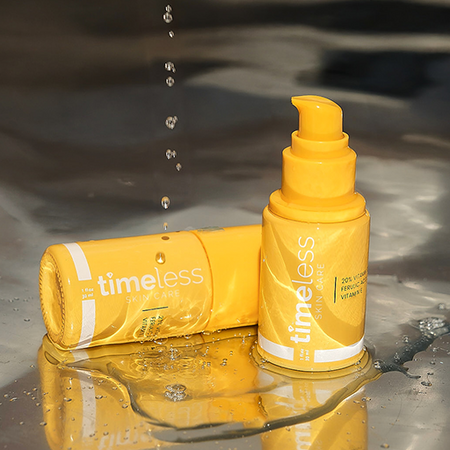
- Apply Antioxidant Serum: One Timeless Skin Care product in this category is the 20% Vitamin C + E Ferulic Acid Serum. Morning use is a common recommendation for antioxidant serums. L-ascorbic acid helps brighten the look of dullness and uneven tone. It also helps defend against oxidative stress caused by environmental factors such as UV exposure and pollution.
- Apply Hydrating Serums: Use lightweight humectant serums next. Hyaluronic acid helps attract, bind, and retain water in the outer layers of the skin.
- Smooth on Eye Cream: Gently tap a small amount around the orbital bone using your ring finger to avoid pulling delicate tissue.
- Moisturize: Smooth a lightweight daily cream or lotion over the face and neck. This helps reduce transepidermal water loss (TEWL).
- Finish with Broad-Spectrum Sunscreen: Apply an adequate amount of broad-spectrum sunscreen with an SPF rating of 30 or higher as your absolute final skincare layer.
Quick Answer: In the morning, sunscreen is always the final skincare step.
Step-by-Step Nighttime Skincare Order
Your evening regimen centers on clearing away the day's accumulation of sunscreen and debris while providing surface conditioning as you sleep.
- Double Cleanse: If you wear makeup or water-resistant sunscreen, begin with an oil-based cleanser or cleansing balm to break down surface grime. Follow immediately with a water-based gel or cream cleanser to wash everything away cleanly.
- Tone or Exfoliate: If your routine includes chemical exfoliating toners, such as glycolic, lactic, or salicylic acid, apply them here. Avoid using strong exfoliating acids in the same session as other potent actives if your skin is prone to redness.
- Apply Targeted Treatment Serums: Night is a useful time for peptide formulas or targeted serums. One Timeless Skin Care product in this category is the Coenzyme Q10 Serum. Peptides may help support the appearance of firmness. Ubiquinone (CoQ10) provides antioxidant support as the skin's natural CoQ10 levels decline with age. CoQ10 helps improve the appearance of fine lines. CoQ10 supports firmer-looking skin. If you have vitiligo, check with your dermatologist before using a CoQ10 product.
- Apply Barrier Support Serums: Layer barrier support serums next. One Timeless Skin Care product in this category is the Vitamin B5 Serum. Vitamin B5 supports the skin barrier and helps the skin retain moisture. It helps the skin feel more comfortable.
- Eye Cream: Apply an eye cream as a separate step. One product in this category is the Dark Circle Peptide Complex Eye Cream.
- Night Moisturizer: Massage a nourishing night cream over your face, neck, and chest. A moisturizer helps reduce moisture loss.
- Optional Facial Oil: If your skin experiences surface flaking or dry air, you can press two to three drops of a facial oil over your moisturizer as the final step. A facial oil helps reduce moisture loss.
Layering Multiple Serums Without Irritation
Many routines incorporate more than one serum. Layering several active ingredients requires attention to texture, pH, and skin tolerance. For additional guidance, review this article on layering multiple serums.
Order from Thinnest to Thickest
When layering two or more serums, evaluate their viscosity:
- Water-thin liquids go first.
- Lightly viscous, slip-heavy liquids go second.
- Gel-creams and emulsion serums go last.
Understanding Key Cosmetic Ingredients
Different active ingredients serve distinct cosmetic functions in your routine:
- Humectants: Hyaluronic acid is a humectant, not a moisturizer. Hyaluronic acid helps attract, bind, and retain water in the outer layers of the skin. Sodium hyaluronate is the sodium salt of hyaluronic acid. It helps support hydration in the upper layers of the epidermis. It helps improve the appearance of dehydration lines. Hydrolyzed hyaluronic acid is hyaluronic acid broken into smaller fragments.
- Antioxidants: Vitamin C, ubiquinone, and ferulic acid are antioxidants. Vitamin C helps neutralize free radicals generated by UV exposure. An antioxidant helps defend against oxidative stress caused by environmental factors such as UV exposure and pollution. An antioxidant supports the skin's antioxidant defenses.
- Barrier Support: Calcium pantothenate is the INCI for vitamin B5. Vitamin B5 supports the skin barrier and helps the skin retain moisture. It helps the skin feel more comfortable.
Avoiding Active Overload
Layering too many strong actives at once can disrupt your barrier function. If your skin feels sensitive or shows signs of excess redness, separate your active serums by time of day:
- Use vitamin C serums in the morning alongside broad-spectrum sunscreen. Vitamin C supports the skin's antioxidant defenses.
- Consider using direct acids, retinoids, or concentrated peptide blends in your evening routine.
- Alternate evenings if you use multiple strong leave-on treatments.
Proper Application Technique and Timing
How you apply your skincare products is just as important as the order in which you apply them.
Waiting Times Between Steps
For basic hydrating routines, you do not need to wait between each layer. You can apply toners, humectant serums, and moisturizers in rapid succession while the skin remains slightly damp.
When using low-pH formulas like L-ascorbic acid or direct exfoliating acids, allow the product to absorb for one to two minutes until it feels set on the skin before layering your next product.
Patting vs. Rubbing
- Patting: Gently pressing liquids and serums into the skin with clean palms helps distribute the product evenly without creating friction.
- Smoothing: Spread moisturizers in gentle upward strokes along the natural contours of your face and neck.
- Avoid Aggressive Rubbing: Rubbing vigorously can cause product pilling, especially when layering products containing silicones, high-molecular-weight polymers, or physical sunscreen mineral filters.
Realistic Expectations for Skincare Routines
Building an intentional skincare routine requires consistency and patience. Cosmetic results vary significantly from person to person based on individual skin physiology, age, climate, and daily habits.
Hyaluronic acid helps improve the appearance of dehydration lines. Changes in skin tone, textural smoothness, and the appearance of fine lines can take time and vary from person to person.
Individual reactions vary, and anyone with a known sensitivity or diagnosed skin condition should check with their dermatologist before introducing new active formulas into their routine. Stick to your chosen regimen consistently, protect your skin daily with broad-spectrum sunscreen, and make adjustments slowly to let your skin adapt.
Note: Skincare is a long-term practice. Cosmetic results vary from person to person, so consistency matters when evaluating tone, texture, and hydration.
Frequently Asked Questions
What is the single most important rule when deciding the order of skincare products?
A common rule is to apply your products from the thinnest consistency to the thickest consistency. Water-based liquids and lightweight serums generally go on clean skin first, followed by heavier lotions, creams, and facial oils. Sunscreen must always be your final step during the daytime.
Can I apply multiple serums in the same morning or evening routine?
Multiple serums can be layered in one routine. Apply the thinnest, most watery formula first, followed by slightly thicker gel or emulsion textures. If you use multiple concentrated active ingredients, consider using one in the morning and another in the evening to maintain comfort.
How long should I wait between applying different skincare layers?
Hydrating products like toners, hyaluronic acid serums, and moisturizers can be applied right after each other on slightly damp skin. If you are applying an acidic serum such as L-ascorbic acid, waiting one to two minutes allows the product to absorb properly before you apply heavier creams.
Is facial oil applied before or after my moisturizer?
Facial oils are generally applied after your moisturizer or mixed directly into it. A facial oil helps reduce moisture loss. Applying an oil first may affect how water-based moisturizers spread.