Introduction
Starting your day with a clear plan for your face can make a routine easier to follow. While evening routines center around washing away the grime of the day and supporting overnight rest, daytime regimens serve a distinct purpose. Your morning steps prepare your skin to face daytime stressors, such as fluctuating humidity, dry air, and outdoor elements.
A thoughtful morning skincare order can help keep formulas from interfering with one another. Applying products out of sequence may cause formulas to ball up into tiny pills or remain on the surface.
Timeless Skin Care was founded in 2009 by Veronica Pedersen to deliver effective, straightforward solutions that cut through the noise of overly complicated regimens. Guided by the principle that "Healthy Skin Is Timeless," a morning routine does not need fifteen different steps. Instead, it can rely on layering a few well-chosen formulas in the right physical sequence. Explore our skincare quiz for help organizing a routine.
Key Takeaway: Morning skincare focuses on daytime defense, hydration, and UV protection. Applying formulas from thinnest to thickest may help prevent pilling.
The Foundation of Layering: Texture and Consistency
A common rule of morning skincare application is ordering products from the thinnest consistency to the thickest consistency. Water-based liquids typically go first, followed by emulsions, creams, and occlusives. For more guidance, read about how to layer multiple serums.
If you place a heavy cream on clean skin, it may make a lightweight water-based serum harder to distribute evenly. Formula chemistry also plays a role. Water and oil generally do not mix naturally without emulsifiers. When you apply water-based toners and thin aqueous serums first, they can absorb into the upper layers of the epidermis. Creams containing plant oils, fatty acids, or silicones then sit over these watery layers.
| Product Type | Base Vehicle | Primary Purpose | Placement |
|---|---|---|---|
| Water Cleanser | Aqueous surfactant | Clears surface sebum and overnight residues | First Step |
| Toner or Essence | Water / Hydrosol | Preps surface with initial hydration | Second Step |
| Active Serums | Water-soluble base | Targets uneven tone and oxidative stress | Third Step |
| Hydrating Serums | Viscous aqueous gel | Supports surface hydration | Fourth Step |
| Eye Treatment | Light emulsion | Conditions delicate peri-orbital skin | Fifth Step |
| Moisturizer | Oil-in-water emulsion | Helps reduce moisture loss | Sixth Step |
| Daily Sunscreen | Emulsion / Mineral suspension | Shields against ultraviolet radiation | Final Step |


Step-by-Step Morning Skincare Sequence
Following a reliable routine can support balanced hydration and daytime protection. Here is a recommended sequence for your morning routine.
Step 1: Gentle Cleansing
Cleansing in the morning clears away overnight perspiration, excess surface sebum, and residual night creams. A gentle, non-stripping water-based cleanser may work well for many people.
Those with dry skin may prefer a quick rinse with lukewarm water rather than a foaming wash. Oily and combination skin types may prefer a mild gel cleanser to sweep away excess oils before applying treatment layers. Avoid harsh soaps that leave your face feeling tight, as over-cleansing can make subsequent steps less comfortable.
Step 2: Hydrating Mists and Toners
After cleansing, an aqueous toner or mist offers a quick layer of liquid to prep the skin surface. Modern toners are designed to refresh the skin without the harsh, drying alcohol found in vintage formulas.
Applying a liquid toner leaves the skin slightly damp. Damp skin may help subsequent water-soluble actives distribute smoothly across the face. Pat the liquid onto your face and neck using clean palms rather than rubbing with rough cotton rounds.
Step 3: Fast-Absorbing Active Serums
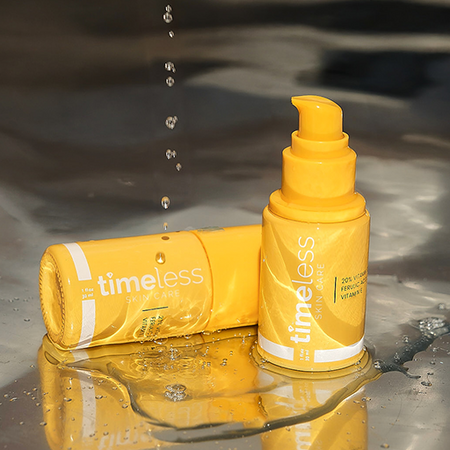
In the Timeless Skin Care lineup, the 20% Vitamin C + E Ferulic Acid Serum is in the vitamin C serum category.
Liquid active treatments should follow directly after your toner while the skin remains receptive. Daytime is a common window for topical antioxidants.
Vitamin C supports the skin's antioxidant defenses. Morning use is the most common recommendation for vitamin C, but it is not the only option. When you use vitamin C in the morning, pair it with broad-spectrum sunscreen. Water-soluble L-ascorbic acid formulas are thin and fluid, making them suitable for this early stage of a routine.
Allow thin antioxidant serums 30 to 60 seconds to sink in before moving to the next layer. This short pause may help prevent the active ingredients from being dragged around unevenly by subsequent creams.
Step 4: Hydrating and Peptide Serums
In the Timeless Skin Care catalog, Hyaluronic Acid 100% Pure represents the hyaluronic acid serum category.
Once your primary active treatment has been applied, use thicker, gel-like hydration formulas. Serums with humectants like hyaluronic acid and peptides add a layer of hydration.
Hyaluronic acid helps attract, bind, and retain water in the outer layers of the skin. Peptide blends can also be applied during this step. Because peptides are typically formulated in lightweight water-based gels, they can be layered under moisturizers without adding heaviness.
Step 5: Eye Area Products
Within the Timeless Skin Care range, the Dark Circle Peptide Complex Eye Cream is in the eye care category.
The eye area can benefit from a formula intended for this delicate area. An eye formula can provide conditioning without adding heaviness to the rest of the routine.
Step 6: Moisturizer
Moisturizers combine humectants, emollients, and light occlusives to condition the skin surface. A daytime moisturizer helps reduce transepidermal water loss (TEWL), the water that evaporates from the skin's surface throughout the day.
Oily skin types may prefer an oil-free lotion or a lightweight gel cream that absorbs with a matte finish. Drier complexions may prefer richer creams containing ceramides and squalane to help reduce moisture loss in low-humidity environments. Smooth the moisturizer outward from the center of the face, covering the neck as well.
Step 7: Broad-Spectrum Sunscreen
Sunscreen is the final step of every morning skincare order. Earlier steps support hydration, while daily broad-spectrum sunscreen protects against ultraviolet radiation associated with premature visible aging.
Apply a generous amount of broad-spectrum SPF 30 or higher to your face, ears, and neck every morning. Let your moisturizer dry down completely before applying sunscreen so the UV filters can form an uninterrupted protective film across the skin. If you plan to wear foundation, wait three to five minutes after sunscreen application before putting on makeup.
Quick Answer: Apply morning skincare in this order: Cleanser, Toner, Antioxidant Serum, Hydrating Serum, Eye Cream, Moisturizer, and Broad-Spectrum Sunscreen.
Ingredient Profiles for Daytime Layering
Understanding the specific ingredients in your morning rotation helps you pair products without irritation or pilling.
Vitamin C (L-Ascorbic Acid)
L-ascorbic acid is a water-soluble antioxidant that helps defend against oxidative stress caused by environmental factors such as UV exposure and pollution. It also helps brighten the look of dullness and uneven tone.
The performance of a vitamin C formula depends on its concentration, the specific form used, the pH of the liquid, and its packaging stability. L-ascorbic acid is naturally sensitive to heat, light, and air exposure. Over time, exposure causes the liquid to oxidize, turning from clear to a darker amber hue. An oxidized serum may lose potency over time and may increase the likelihood of irritation for some people.
Hyaluronic Acid and Sodium Hyaluronate
Hyaluronic acid is a humectant, not a moisturizer. It helps support hydration in the upper layers of the epidermis.
Sodium hyaluronate is the sodium salt of hyaluronic acid. Hyaluronic acid helps improve the appearance of dehydration lines that often become visible by midday.
Peptides
Peptides such as palmitoyl tripeptide-1 and palmitoyl tetrapeptide-7 may help support the appearance of firmness. They can be layered alongside humectants and under daily sun protection.
Coenzyme Q10 (Ubiquinone)
Ubiquinone is a lipid-soluble antioxidant naturally found in the skin. CoQ10 provides antioxidant support as the skin's natural CoQ10 levels decline with age. It helps improve the appearance of fine lines and supports firmer-looking skin.
CoQ10 is generally used once daily. Because it is an oil-soluble antioxidant, formulas featuring CoQ10 often have a light, milky texture that can be applied right before or after water-based hydrators. For more information, read Coenzyme Q10: What Is It, How to Use It, and When to Use It. Note that CoQ10 should not be used under the eyes. If you have vitiligo, check with your dermatologist before using a CoQ10 product.
Vitamin B5 (Calcium Pantothenate)
Vitamin B5 supports the skin barrier and helps the skin retain moisture. It also helps the skin feel more comfortable. Learn more in what are the 3 benefits of vitamin B5.
Note: Skincare ingredients do not activate or boost one another. Instead, each compound operates independently within the formula vehicle to support your skin's surface appearance.
What to Avoid in the Morning
Certain active ingredients may be better reserved for evening use. Knowing what to leave out of your morning sequence can help keep your routine balanced and minimize accidental sensitivity.
- High-strength exfoliating acids: Leave-on alpha hydroxy acids like glycolic acid and lactic acid may increase sensitivity for some people. Save strong acid peels and leave-on exfoliants for nighttime use.
- Retinoids and retinol: Retinoids are commonly reserved for evening routines, and retinoid use may increase sun sensitivity. Consider applying vitamin A formulas in the evening.
- Heavy occlusive balms: Thick petrolatum-based ointments and face oils may interfere with even sunscreen application. Keep dense facial oils for your bedtime routine.
Building Realistic Expectations for Skincare Results
Cosmetic skin improvements require patience, consistency, and realistic expectations. A hydrating serum can improve surface comfort and smooth the look of dry texture, while the appearance of skin tone, fine lines, and elasticity may change gradually.
Individual skin responses vary widely based on genetics, climate, lifestyle, and underlying skin health. Adding more steps or applying larger quantities of active serums does not necessarily speed up cosmetic results. Over-applying active formulas can trigger redness and barrier strain. A consistent routine with a few well-formulated products, coupled with daily broad-spectrum sunscreen, can support the skin's appearance over time. Explore DIY Build Your Kit when choosing a streamlined routine.
Anyone with known allergies, acute skin reactivity, or diagnosed skin conditions should check with their dermatologist before introducing new active formulas into their routine.
Frequently Asked Questions
Do I really need to wash my face with a cleanser in the morning?
Not everyone needs a foaming cleanser upon waking. If you have very dry or sensitive skin, a thorough rinse with lukewarm water may be sufficient to clear overnight sweat without removing natural surface lipids. However, if you wake up with oily skin or used heavy occlusives the night before, a mild, water-based cleanser helps create a clean slate for your morning serums.
Can I layer more than one serum in the morning?
You can apply more than one serum as long as you follow the rule of thinnest to thickest consistency. For example, a watery antioxidant serum can be applied first, followed by a slightly thicker hyaluronic acid or peptide gel. To help prevent pilling and support even distribution, allow the first serum to absorb for 30 to 60 seconds before applying the next layer.
How long should I wait between my morning skincare steps?
Most steps only require 30 to 60 seconds to absorb into the skin surface. The key waiting period occurs before and after sunscreen. Allow your moisturizer to set fully before applying your broad-spectrum sunscreen so the UV barrier forms properly. Once sunscreen is applied, wait three to five minutes before applying makeup to avoid disrupting the protective film.
What should I do if my daytime skincare routine pills under makeup?
Pilling usually happens when products are layered too quickly, when formulas contain incompatible silicones and heavy oils, or when too much product is applied at once. To help reduce pilling, use less product per step, skip heavy daytime facial oils, and allow each layer sufficient time to dry down before adding the next.