Introduction
Layering products in a consistent sequence can make a routine easier to follow. Many people collect numerous serums and creams over time, only to find that an overloaded regimen can contribute to surface flaking. A simple skincare routine order focuses on essential steps that clean, hydrate, and protect the skin.
You do not need a dozen steps every morning and night to achieve healthy-looking skin. Paring down your regimen can help you identify which ingredients deliver visible improvements. Building a daily habit around straightforward steps makes consistency easier to maintain.
Timeless Skin Care was founded in 2009 by Veronica Pedersen.
Quick Answer: A simple skincare routine follows a thinnest-to-thickest texture rule. In the morning, cleanse, apply your serum, moisturize, and finish with a broad-spectrum sunscreen. At night, cleanse to remove surface debris, apply your chosen targeted serum, and finish with a moisturizer.
The Fundamental Rule: Thinnest to Thickest Textures
The general rule for product application is layering from the lightest consistency to the heaviest. Water-based liquids are generally lighter, while richer creams are applied later in the routine.
For easier layering, apply a fluid serum before a thick, lipid-rich face cream.
| Texture Category | Typical Products | Placement in Routine | Primary Purpose |
|---|---|---|---|
| Water-Based Liquid | Toners, watery essences | First layer after cleansing | Prepares skin surface |
| Light Fluid | Water-based serums | Second layer | Delivers concentrated cosmetic ingredients |
| Emulsion / Gel | Light lotions, gel creams | Third layer | Provides light hydration and comfort |
| Rich Cream | Heavy moisturizers, facial oils | Final evening step | Helps reduce moisture loss |
| Sun Protection | Broad-spectrum sunscreen | Final morning step | Defends against UV rays |
Finishing with a face cream helps reduce transepidermal water loss (TEWL).


The Core Morning Routine: Protection and Defense
Daytime skincare focuses primarily on shielding your face from environmental elements. Ultraviolet light and outdoor particulate matter expose the surface of your skin to oxidative stress throughout the day.
A streamlined morning schedule covers the fundamental steps:
- Cleanse with lukewarm water or a gentle foaming face wash.
- Apply an antioxidant or hydrating serum to clean skin.
- Smooth a lightweight daily moisturizer over your face and neck.
- Finish with a generous layer of broad-spectrum sunscreen with at least SPF 30.
Key Takeaway: Morning skincare is about surface defense. Always finish your daytime sequence with a dedicated broad-spectrum sunscreen, even if your daytime moisturizer contains SPF filters.
Cleansing in the morning removes nighttime oils and residual evening products. If your skin feels dry upon waking, rinsing with plain water is often sufficient.
Applying an antioxidant step in the morning supports the skin's antioxidant defenses. Vitamin C helps neutralize free radicals generated by UV exposure. Follow with your standard moisturizer.
Sunscreen is non-negotiable every morning. Apply your broad-spectrum SPF as the final step before makeup. Sunscreen formulations must form an uninterrupted film over the skin to work effectively, so layering creams on top of them can disrupt that protective barrier.
For help choosing a straightforward routine, use our skincare quiz.
The Core Evening Routine: Cleansing and Replenishment
While daytime products focus on defense, nighttime routines prioritize thorough cleansing and hydration. During the evening, you wash away airborne particles, sweat, and long-wear cosmetic formulas.
- Cleanse thoroughly to lift makeup, sunscreen, and excess sebum.
- Apply your targeted evening treatment or hydrating serum.
- Smooth a nourishing moisturizer over your face to support overnight hydration.
If you wear heavy foundation or water-resistant sunscreen, double cleansing can be helpful. Start with an oil cleanser or micellar fluid to dissolve surface makeup, followed by a gentle water-based cleanser to leave the skin clean.
After washing, apply your chosen targeted active step. Evening is suitable for hydrating ingredients, peptides, or exfoliating acids. Humectants such as hyaluronic acid work well here. Hyaluronic acid helps attract, bind, and retain water in the outer layers of the skin.
Finish your evening regimen with a dedicated facial moisturizer. A face cream helps reduce transepidermal water loss (TEWL) while you sleep.
For more guidance on sequence, see how to layer multiple serums.
How to Layer Target Ingredients Correctly
Once you have mastered the basic sequence of cleansing, moisturizing, and sun protection, you may choose to integrate targeted serums. Navigating active ingredients is simpler when you understand their basic properties.
Vitamin C
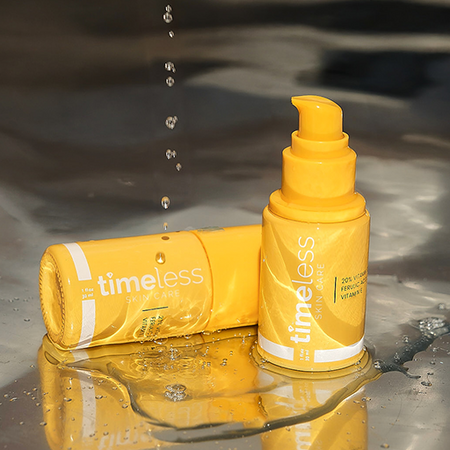
Our Vitamin C category includes the 20% Vitamin C + E Ferulic Acid Serum.
Vitamin C is a water-soluble antioxidant. Vitamin C helps brighten the look of dullness and uneven tone. L-ascorbic acid is the most researched form of Vitamin C, but it is not automatically the best form.
Apply Vitamin C serums directly onto clean, dry skin before heavier creams. Morning use is the most common recommendation, but it is not the only option. When using Vitamin C in the morning, pair it with a broad-spectrum sunscreen. Vitamin C helps defend against oxidative stress caused by environmental factors such as UV exposure and pollution.
L-ascorbic acid is sensitive to air, light, and heat.
Hyaluronic Acid and Humectants
Our Hydration category includes Hyaluronic Acid 100% Pure.
Hyaluronic acid is a humectant, not a moisturizer. It helps support hydration in the upper layers of the epidermis. It helps improve the appearance of dehydration lines.
Sodium hyaluronate is the sodium salt of hyaluronic acid, and hydrolyzed hyaluronic acid refers to molecules broken into smaller fragments. Hyaluronic acid helps attract, bind, and retain water in the outer layers of the skin. Apply it to slightly damp skin immediately after cleansing or misting.
Coenzyme Q10
Our Antioxidant category includes the Coenzyme Q10 Serum.
Ubiquinone, known as CoQ10, is a lipid-soluble antioxidant naturally found in skin. CoQ10 provides antioxidant support as the skin's natural CoQ10 levels decline with age. CoQ10 supports firmer-looking skin. CoQ10 helps improve the appearance of fine lines.
CoQ10 formulas layer easily under daily moisturizers. Generally, CoQ10 is used once daily. Never apply CoQ10 products directly under the eyes. If you have vitiligo, check with your dermatologist before using a CoQ10 product.
Peptides
Peptides are short chains of amino acids used in topical formulations. Peptides may help support the appearance of firmness.
Because most peptide serums feature lightweight water bases, apply them after cleansing and before heavier face creams. They integrate smoothly into both morning and nighttime routines without adding heavy oiliness.
Note: Individual skin reactions vary across different active ingredients. Anyone with a known sensitivity or a diagnosed skin condition should check with their dermatologist before introducing new concentrated serums.
Setting Realistic Expectations for Cosmetic Results
When starting a streamlined skincare regimen, patience is vital. Cosmetic changes are gradual, and visible improvements in texture, radiance, and fine lines may develop with consistent use.
| Skincare Focus | Common Target Ingredients | What to Expect Initially | Long-Term Cosmetic Goal |
|---|---|---|---|
| Surface Hydration | Hyaluronic acid, glycerin | Immediate softening of dehydration lines | More supple-looking skin texture |
| Tone & Brightness | Vitamin C, gentle acids | Slight improvement in surface glow | Helps brighten the look of dullness and uneven tone |
| Firmness & Elasticity | Peptides, CoQ10 | Smooth product finish | Supports firmer-looking skin over time |
| Barrier Support | Fatty acids, ceramides | Skin feels more comfortable | Helps reduce moisture loss |
You can expect sensory improvements, such as softer texture and reduced surface tightness, once you introduce a balanced moisturizer and humectant. Improvements in the appearance of firmness or deeper lines can develop with consistent daily use.
Sticking to a simple routine every day can make consistency easier than rotating through dozens of different products erratically.
Frequently Asked Questions
How long should I wait between applying skincare steps?
Most products do not require long waiting periods between applications. You can usually move from a water-based serum to your moisturizer once the tacky feeling settles. The main exception is sunscreen, which should be allowed to set for a few minutes before applying facial makeup so the protective film remains undisturbed.
Can I use the same moisturizer for morning and night?
Yes, a basic hydrating moisturizer can work well for both daytime and evening use. The key difference is that your morning routine must conclude with a separate broad-spectrum sunscreen. At night, you can apply your moisturizer alone or layer it more generously if your skin feels dry.
In what order should I apply eye cream?
Eye cream is typically applied after lightweight serums and either before or in place of your standard face moisturizer around the orbital bone. Because eye creams vary in weight from light gels to dense balms, follow the thinnest-to-thickest rule. Use a gentle tapping motion with your ring finger along the orbital bone, avoiding direct contact with the eyelids.
Should I apply serums to wet or dry skin?
Humectant serums, such as hyaluronic acid, can be applied to slightly damp skin. Hyaluronic acid helps attract, bind, and retain water in the outer layers of the skin. Potent acid-based formulas or L-ascorbic acid serums are generally applied to completely dry skin after cleansing to minimize the risk of surface tingling and irritation.