Introduction
Building an effective skincare routine involves more than selecting quality formulas. The sequence in which you apply products can influence how evenly layers spread across your skin. Applied haphazardly, thick creams may make lighter liquids harder to spread, while delicate formulas may pill or wash away.
Navigating the correct steps does not require an overwhelming ten-step regimen. A structured routine comes down to understanding product textures and how specific formulas interact. Whether you are using a simple three-step setup or incorporating specialized serums, getting your skincare in order can help keep each layer organized.
At Timeless Skin Care, founded in 2009 by Veronica Pedersen, the focus has always been on clean, straightforward formulations that fit seamlessly into daily life. When you understand the fundamental rules of product order, you can curate a personalized regimen that supports healthy, radiant-looking skin morning and evening.
The Core Principles of Product Layering
Before walking through individual steps, it helps to understand the underlying logic behind skincare layering. Formulations interact physically with the stratum corneum, which is the outermost layer of your skin.
A common layering approach is to apply products from thinnest to thickest texture. Water-based liquids are generally lightweight, while oils and creams tend to have richer textures. If you apply a dense oil or heavy cream first, a later water-based product may not spread as evenly. Starting with water-based textures and finishing with richer products can make layering more straightforward.
Key Takeaway: Apply products starting with the thinnest, water-based textures and finish with the thickest, oil-rich creams.
Texture and Base Compatibility
Skincare formulas generally fall into three structural categories:
- Water-based liquids, including watery toners, essences, and lightweight hydrators
- Anhydrous solutions and facial oils, which contain no water
- Emulsions, creams, and balms, which combine water and oil phases to create richer textures
Water and oil naturally separate. Applying a light, water-based serum over an occlusive facial oil may cause the serum to bead up rather than distribute evenly. Sticking to the sequence of water first, light emulsion second, and lipid or occlusive finish third can support more even application across your complexion.
| Step Phase | Product Category | Primary Function |
|---|---|---|
| Phase 1: Prep | Cleansers and Toners | Cleanses surface residue and supports hydration |
| Phase 2: Treat | Targeted and Hydrating Serums | Adds targeted and hydrating serums |
| Phase 3: Protect | Eye Creams and Moisturizers | Softens texture and helps reduce moisture loss |
| Phase 4: Shield | Broad-Spectrum Sunscreen | Defends against UV rays (AM only) |
Absorption and Wait Times
You do not need extended pauses between every step in your routine. For most hydrating toners, serums, and lotions, waiting roughly thirty to sixty seconds allows the layer to settle before the next application.
Certain formulas benefit from specific skin conditions during application. Humectant ingredients like hyaluronic acid can be applied to slightly damp skin. Hyaluronic acid helps attract, bind, and retain water in the outer layers of the skin. Potent acidic formulas or retinoids are often applied to completely dry skin.


Step-by-Step Morning Routine Order
Your daytime regimen focuses on hydration and environmental protection. During daylight hours, your skin encounters UV rays, pollution, and fluctuating humidity levels.
- Cleanser
- Hydrating Mist or Balancing Toner
- Daytime Antioxidant Serum
- Hydrating Serum
- Eye Cream
- Daily Moisturizer
- Broad-Spectrum Sunscreen
Step 1: Gentle Cleanser
Washing your face in the morning clears away sebum, sweat, and dead skin cells that accumulate overnight. A gentle, sulfate-free foaming or gel cleanser works well for normal to oily skin types. If you have drier or sensitive skin, rinsing with lukewarm water or using a mild lotion cleanser may be sufficient to refresh your complexion without stripping natural surface lipids.
Step 2: Hydrating Mist or Balancing Toner
Modern toners are designed to refresh the skin without harsh, drying alcohols. A quick sweep of toner or a light facial mist helps support hydration in the upper layers of the epidermis. This step prepares the skin surface, leaving it receptive to the concentrated treatments that follow.
Step 3: Daytime Antioxidant Serum
Antioxidant serums are ideal additions to your morning routine. Environmental factors like sunlight and urban pollution generate free radicals throughout the day. Using an antioxidant serum helps defend against oxidative stress caused by environmental factors such as UV exposure and pollution.
Vitamin C is one of the most widely researched topical antioxidants available. The Vitamin C category includes vitamin C serums. Vitamin C helps brighten the look of dullness and uneven tone. It supports the skin's antioxidant defenses.
Another valuable antioxidant is Coenzyme Q10, often referred to as CoQ10. Coenzyme Q10 is a lipid-soluble antioxidant naturally found in skin. As an ingredient, it provides antioxidant support as the skin's natural CoQ10 levels decline with age. It helps improve the appearance of fine lines. It supports firmer-looking skin. If you have vitiligo, check with your dermatologist before using a CoQ10 product.
Step 4: Hydrating Serum
After your targeted antioxidant step, apply any general hydrating serums. Hyaluronic acid is a humectant, not a moisturizer. It helps attract, bind, and retain water in the outer layers of the skin. It helps improve the appearance of dehydration lines.
Vitamin B5, also known in skincare formulations as Calcium Pantothenate, is another excellent hydrator. Vitamin B5 supports the skin barrier and helps the skin retain moisture. It helps the skin feel more comfortable.
Step 5: Eye Cream
The skin surrounding the eyes is thinner than the rest of the face and has fewer oil glands. Applying a pea-sized amount of eye cream around the orbital bone before heavier face creams keeps the eye treatment ahead of richer layers. Gently tap the formula with your ring finger, taking care not to pull or drag the delicate tissue.
Step 6: Daily Moisturizer
Moisturizers supply a blend of emollient and occlusive agents. A daytime moisturizer helps reduce transepidermal water loss (TEWL), the water that evaporates from the skin's surface. Choose a lightweight lotion or gel cream if you have oily skin, or a richer cream if your skin tends toward dryness or flakiness.
Step 7: Broad-Spectrum Sunscreen
Sunscreen is the mandatory final step of every daytime skincare routine. UV radiation is present year-round, even on overcast days and through standard window glass.
Apply a liberal amount of broad-spectrum sunscreen with an SPF rating of 30 or higher to your face, neck, and ears. Sunscreen forms a uniform protective shield over your other skincare layers. Applying serums or moisturizers over your sunscreen may disrupt that film and reduce its protective capability. Allow your moisturizer to settle for a minute before smoothing on your SPF.
Note: Apply broad-spectrum sunscreen as the final daytime step.
Step-by-Step Nighttime Routine Order
Your evening regimen is designed to remove the debris of the day and supply concentrated ingredients while your body rests.
- First Cleanse (Makeup and Sunscreen Removal)
- Second Cleanse (Water-Based Cleanser)
- Exfoliant (1 to 3 times weekly)
- Targeted Treatment or Peptide Serum
- Hydrating Serum
- Nourishing Eye Cream
- Night Cream or Facial Oil
Step 1 and Step 2: The Double Cleanse
An evening double cleanse thoroughly clarifies the complexion without aggressive scrubbing:
- Step 1: Massage a cleansing oil, balm, or micellar water over dry skin to dissolve long-wear foundation, surface grime, and water-resistant sunscreen filters.
- Step 2: Follow with a gentle water-based cleanser to lift away remaining sweat, impurities, and oil residues, leaving the skin clean and balanced.
Step 3: Chemical Exfoliant (Occasional)
Exfoliation removes loose, dead surface cells that can cause skin to appear rough or uneven. Alpha hydroxy acids, like glycolic or lactic acid, and beta hydroxy acids, such as salicylic acid, can smooth the skin surface and improve the look of uneven texture.
Limit chemical exfoliation to one to three nights per week. Over-exfoliating can disrupt the outer moisture barrier and lead to temporary redness or sensitivity. On nights when you exfoliate, skip other potent active treatments to avoid overloading your skin.
Step 4: Targeted Treatment or Peptide Serum
Peptides are amino acid chains used topically in modern skincare.
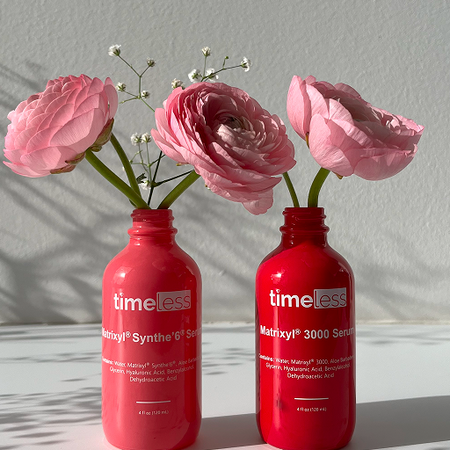
In the Timeless Skin Care range, the peptide category includes the Matrixyl® 3000 Serum. Peptides may help support the appearance of firmness.
Step 5: Hydrating Serum
Following your active treatment, smooth on a hydrating humectant layer. Within the Timeless Skin Care hydration collection, this category includes Hyaluronic Acid 100% Pure. Hyaluronic acid is a humectant, not a moisturizer. It helps attract, bind, and retain water in the outer layers of the skin. It helps improve the appearance of dehydration lines.
Step 6: Nourishing Eye Cream
Apply your evening eye treatment across the orbital bone. Night formulas often feature richer bases that provide lasting emollience while you sleep.
Step 7: Night Cream or Facial Oil
Finish your evening routine with a nourishing moisturizer or night cream. Evening formulas are often slightly more emollient than daytime lotions, providing long-lasting barrier support. The emollient and occlusive components work overnight and help reduce moisture loss while you sleep. If your skin is exceptionally dry, you can pat two to three drops of a non-comedogenic facial oil over your moisturizer as the final step.
Managing Ingredient Pairings and Routine Adjustments
Knowing the correct product sequence also means understanding how to manage multiple active ingredients without overwhelming your skin barrier.
Rotating Active Ingredients
Using every strong ingredient in a single routine is rarely necessary. If you want to use both Vitamin C and exfoliating acids or retinoids, separating them by time of day or alternating evenings is a sensible strategy:
- Morning: Use Vitamin C or antioxidant blends paired with broad-spectrum sunscreen. Vitamin C helps neutralize free radicals generated by UV exposure.
- Evening A: Use peptide serums alongside hydrating humectants and barrier creams.
- Evening B: Use exfoliating acids or retinoids followed by rich moisturizing layers.
Texture Troubleshooting: Preventing Product Pilling
Skincare pilling occurs when formulas fail to absorb and instead ball up into tiny flakes on the skin. Common causes include:
- Applying products too quickly without letting previous layers settle
- Layering incompatible silicone-heavy formulas over water-based treatments
- Using too much product per application
- Applying an oil before a water-based serum
If pilling occurs, reduce the amount of product used and ensure lighter water solutions are fully patted into the skin before smoothing on thicker lotions.
Setting Realistic Expectations for Your Skincare Routine
Establishing a consistent routine in the correct order helps keep skincare steps organized. However, cosmetic changes require patience and regular application.
Skin cells naturally turn over across an extended biological cycle. You should not expect instant, dramatic shifts overnight. Hyaluronic acid helps improve the appearance of dehydration lines. Changes in skin tone, visible firmness, and overall texture can develop gradually with consistent use.
Every individual's skin is distinct. What produces a glowing appearance for one person may feel too heavy or light for another. Factors such as climate, seasonal shifts, hormonal variations, and baseline sensitivity all influence how your skin responds.
Individual reactions vary across different ingredient profiles. Anyone with a known sensitivity or diagnosed skin condition should check with their dermatologist before introducing new active formulas to their daily regimen.
Made in the USA in small batches, Timeless Skin Care focuses on high concentrations of purposeful ingredients. A consistent, well-ordered regimen can keep daily skincare straightforward.
Frequently Asked Questions
How long should you wait between applying each skincare step?
For the majority of daily products, you only need to wait thirty to sixty seconds between steps. This brief pause gives each layer time to settle so that subsequent formulas do not slide or pill. If you are applying sunscreen over your daytime moisturizer, waiting one to two minutes ensures the moisturizer has set completely, allowing the sunscreen to form an even, uninterrupted protective film over your face.
Can you apply moisturizer before a facial serum?
Applying moisturizer before a water-based serum is not recommended. Moisturizers contain emollients and occlusives designed to help reduce moisture loss at the surface. If you apply a dense moisturizer first, it may make the lighter, water-based serum harder to spread evenly. For a straightforward order, apply lightweight serums to clean skin before smoothing on your moisturizer.
Do you really need to wash your face in the morning?
Morning cleansing depends on your skin type and overnight product use. If you have oily skin, a gentle morning cleanse removes excess sebum and nighttime residues that build up while sleeping. If you have very dry or sensitive skin, rinsing thoroughly with lukewarm water may be sufficient. However, if you wake up with sweat or heavy nighttime creams on your face, a mild cleanser ensures a clean base for your morning antioxidant and sunscreen steps.
What should you do if your skincare starts pilling?
If your products begin pilling into small flakes, review the order and quantity of your applications. Ensure you are applying water-based formulas first and allowing each layer a moment to settle before applying the next. Pilling often happens when using too much product at once or mixing heavy silicone-based primers with oil-heavy creams. Using smaller, pea-sized amounts and gently pressing products into the skin rather than rubbing vigorously helps reduce pilling.