Introduction
Building an effective skincare regimen often starts with serums. These targeted formulas deliver concentrated ingredients designed to address specific cosmetic concerns, from dull tone to visible dryness. However, having great formulas on your vanity is only half the equation. The sequence in which you apply them can affect how evenly they spread and absorb on your skin.
When applied incorrectly, products can pill, roll off the skin, or fail to distribute evenly. Applying a lightweight liquid over a dense cream, for instance, can make it harder for the thinner formula to spread evenly across the skin. Understanding the fundamentals of skincare serum order can help you apply products consistently.
At Timeless Skin Care, founded in 2009 by Veronica Pedersen, the focus has always been on concentrated formulas. Making those formulas work for your daily routine requires just a few simple rules of application. Whether you are using a single targeted product or combining multiple steps, this guide breaks down the science of serum layering step by step.
Quick Answer: Apply your skincare products from thinnest to thickest consistency. Start with lightweight, water-based serums right after cleansing and toning, move to thicker emulsions or anhydrous formulas, and follow with moisturizer. Always finish your morning routine with broad-spectrum sunscreen.
The Core Principles of Serum Layering
Layering multiple serums does not need to be complicated. Rather than memorizing endless product combinations, you can rely on three formulation rules to determine the right order every time.
1. Texture and Viscosity: Thinnest to Thickest
The most reliable rule of thumb in skincare is applying formulas from lowest viscosity to highest viscosity. Lightweight, watery liquids are typically applied first so they can have direct contact with clean skin. If you apply a heavier emulsion or oil first, it leaves a conditioning film that can make it harder for lighter liquids to spread smoothly.
Assess the physical texture of your products:
- Water-based solutions and liquid toners come first.
- Lightweight gels and fluid serums come second.
- Richer emulsions, lotions, and anhydrous formulas follow.
- Heavy creams, facial oils, and occlusives come last.
2. Base Formulation: Water Before Oil
Skincare vehicles are generally formulated as water-based, anhydrous (water-free), or oil-based. Water and oil can repel one another. Applying an oil-based product first creates a hydrophobic layer on the skin surface. Any water-based serum applied on top may sit over that layer or bead up.
For even distribution, apply your water-soluble actives first. After they have settled into the skin, you can follow with lipid-rich serums, moisturizers, or facial oils.
3. Concern Prioritization
If you are applying two serums with similar, water-like consistencies, order them by your primary cosmetic goal. The serum that targets your main concern generally goes first. This puts the primary active ingredient at the front of your routine.
| Serum Format | Texture Description | Typical Placement | Examples |
|---|---|---|---|
| Water-Based | Thin, fluid, quick-absorbing liquid | First layer after cleansing/toning | Hyaluronic acid, L-ascorbic acid solutions |
| Gel / Light Fluid | Slightly viscous, spreadable gel | Second layer or standalone treatment | Peptides, niacinamide, botanical extracts |
| Anhydrous / Emulsion | Water-free fluid or light milky lotion | Applied after water-based serums | Retinoids in squalane, lipid antioxidants |
| Oil-Based | Rich, dense, lipid-heavy oil | Applied after or mixed with moisturizer | Squalane oil, argan oil, rosehip oil |


How to Layer Common Active Ingredients
Different active ingredients serve distinct cosmetic functions. Understanding how specific ingredients behave helps you place them properly in your morning and evening routines. For ingredient definitions, explore our active ingredients.
Hyaluronic Acid and Humectants
Hyaluronic acid is one of the most widely used humectants in skincare. It helps attract, bind, and retain water in the outer layers of the skin. Sodium hyaluronate is the sodium salt of hyaluronic acid, and hydrolyzed hyaluronic acid refers to hyaluronic acid broken into smaller fragments. When applied to the skin, sodium hyaluronate may penetrate slightly further into the outer layers of the skin.
Hyaluronic acid helps support hydration in the upper layers of the epidermis. It helps improve the appearance of dehydration lines. Follow humectant serums with a moisturizer to complete your routine.
The Hyaluronic Acid 100% Pure is in the brand's hydration category.
Vitamin C and Antioxidants
Vitamin C is a staple ingredient for daytime routines. It helps brighten the look of dullness and uneven tone. The most extensively researched form of topical vitamin C is L-ascorbic acid, a water-soluble antioxidant.
Its performance also depends on the specific form of the active, overall formulation, pH level, stability, and packaging. L-ascorbic acid requires an acidic pH to remain stable and functional in water-based solutions. Because it is sensitive to light, air, and heat, oxidation occurs gradually over time. An oxidized serum loses potency and may increase the likelihood of irritation for some people.
An antioxidant serum supports the skin's antioxidant defenses. It helps defend against oxidative stress caused by environmental factors such as UV exposure and pollution. Always follow your morning antioxidant step with a broad-spectrum sunscreen.
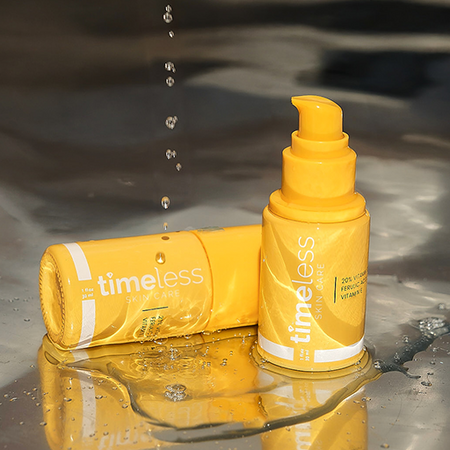
Within the Timeless Skin Care antioxidant lineup, the 20% Vitamin C + E Ferulic Acid Serum is in the vitamin C category.
Coenzyme Q10 and Peptides
Coenzyme Q10, or ubiquinone, is a lipid-soluble antioxidant naturally found in the skin. It provides antioxidant support as the skin's natural CoQ10 levels decline with age. CoQ10 helps improve the appearance of fine lines. It supports firmer-looking skin.
Note: If you have vitiligo, check with your dermatologist before using a CoQ10 product.
Peptides are short chains of amino acids that serve as popular additions to age-defense routines. Specialized peptide complexes, such as palmitoyl tripeptide-1, palmitoyl tetrapeptide-7, and palmitoyl tripeptide-38, may help support the appearance of firmness. Peptides are generally formulated in gentle, water-based or light gel vehicles that layer comfortably under heavier creams.
The Coenzyme Q10 Serum is in the specialty antioxidant category.
Vitamin B5
Vitamin B5, often incorporated in skincare as calcium pantothenate, supports the skin barrier and helps the skin retain moisture. It helps the skin feel more comfortable, particularly when using strong active treatments or adjusting to dry climates.
Step-by-Step Skincare Routine Order
To avoid product pilling and maximize cosmetic benefits, organize your routine into clear, logical phases. Below are standard morning and evening workflows designed to keep your routine balanced. For help choosing products, use the skincare quiz.
The Morning Routine
Your morning routine should focus on daytime hydration, antioxidant support, and sun defense.
- Cleanser: Wash your face with a gentle, non-stripping cleanser to remove oils accumulated overnight.
- Toner or Mist (Optional): Refresh the skin surface and provide an initial layer of hydration.
- Antioxidant Serum: Apply a water-based vitamin C or antioxidant serum to bare, clean skin. This helps neutralize free radicals generated by UV exposure.
- Hydrating Serum: Apply a humectant layer, such as hyaluronic acid. Hyaluronic acid helps attract, bind, and retain water in the outer layers of the skin.
- Moisturizer: Smooth a light lotion or cream over the face and neck. A moisturizer helps reduce transepidermal water loss (TEWL).
- Broad-Spectrum Sunscreen: Apply a generous amount of broad-spectrum SPF 30 or higher as the final step. Sunscreen is essential every single day, regardless of weather.
The Evening Routine
The evening routine focuses on thorough cleansing, targeted treatments, and replenishing the skin barrier.
- First Cleanse: Use an oil cleanser or micellar water to break down makeup, sunscreen, and daily debris.
- Second Cleanse: Follow with a gentle water-based cleanser to leave the skin surface clean.
- Exfoliant (2 to 3 times weekly): If using alpha or beta hydroxy acids, apply them directly to dry skin after cleansing.
- Treatment Serums: Apply your active serums, such as peptides, retinoids, or specialty antioxidants.
- Hydrating or Barrier Serums: Layer your humectant or barrier-support formulas over your active treatments.
- Eye Cream (Optional): Gently pat eye cream along the orbital bone using your ring finger.
- Night Cream or Facial Oil: Finish with a richer moisturizer or facial oil. This helps reduce moisture loss.
Key Takeaway: Consider limiting a routine to two or three serums. Overloading the skin with excessive layers can increase the risk of friction, pilling, and ingredient intolerance.
Understanding Potential Conflicts and Layering Mistakes
While modern cosmetic chemistry allows many ingredients to coexist peacefully, certain layering mistakes can diminish the user experience or cause cosmetic irritation.
Applying Products Out of Order
The most frequent mistake is applying a heavy, occlusive moisturizer before a lightweight water-based serum. A moisturizer helps reduce moisture loss, but applying one before a lightweight water-based serum can make it harder for the serum to spread evenly. Apply your thinnest serums first.
Rushing Between Layers
Applying multiple serums back-to-back without giving them a moment to settle can cause formulas to mix awkwardly on the skin, leading to pilling. You do not need to wait ten minutes between steps, but waiting 30 to 60 seconds gives the previous layer time to settle so the next formula glides on smoothly.
Over-Exfoliating and Layering Too Many Strong Actives
Combining multiple exfoliating acids, pure L-ascorbic acid, and strong retinoids in the same single routine can overwhelm the skin surface. Individual reactions vary, and anyone with a known sensitivity should check with their dermatologist. If you want to use several strong active products, consider alternating them between your morning and evening routines, or using them on alternate days.
Setting Realistic Expectations with Skincare Serums
When introducing new serums into your routine, patience and consistency are essential. Skincare products may produce gradual cosmetic changes rather than immediate transformations.
Hyaluronic acid helps improve the appearance of dehydration lines. Ingredients targeting tone and firmness may require consistent use before changes become noticeable.
Every person's skin responds differently depending on baseline barrier health, environmental exposure, genetics, and adherence to daily sunscreen use. Evaluate your routine over time rather than immediately, and adjust your product choices as your skin's needs change throughout the seasons. The DIY Build Your Kit collection groups products for selection.
Frequently Asked Questions
How many serums can you layer in a single routine?
Two or three serums can be a practical starting point for a single routine. Layering too many concentrated formulas can overwhelm the skin surface, increase the likelihood of irritation, and cause formulas to pill. If you have multiple skin goals, divide your targeted serums between your morning and evening routines.
Should hyaluronic acid be applied before or after vitamin C?
If both formulas are water-based, apply vitamin C first. L-ascorbic acid formulas are formulated at a low pH and work best when applied directly to clean, dry skin. After the vitamin C serum settles, apply your hyaluronic acid serum over it. Hyaluronic acid helps support hydration in the upper layers of the epidermis.
Can you use peptides and vitamin C together in the same routine?
Many people use peptides and vitamin C within the same regimen. If you prefer to keep your routines simple, use your vitamin C serum in the morning, followed by broad-spectrum sunscreen, and apply your peptide serum in the evening. Peptides may help support the appearance of firmness.
How long should you wait between applying different serums?
You do not need an extended waiting period between steps. Waiting roughly 30 to 60 seconds can help each serum settle and can help limit excess friction or pilling when the next product is applied. Once your skin feels slightly dry to the touch, move directly to your next layer.