Introduction
Knowing which skincare products to buy is only half the battle. Figuring out the proper face skincare order can help formulas work as intended on the surface of your skin. When formulas are applied out of sequence, heavier creams may interfere with lighter liquids and contribute to pilling or wasted product.
At Timeless Skin Care, founded in 2009 by Veronica Pedersen, we focus on straightforward formulations made in the USA in small batches. Layering your products properly does not require an overwhelming ten-step process. A clean, structured routine tailored to your skin needs can support the appearance of your skin.
Quick Answer: Morning routines commonly include antioxidants and sunscreen, while nighttime steps focus on cleansing, targeted serums, and hydration support. A general rule of thumb is to apply formulas from thinnest consistency to thickest texture.
Understanding how to layer properly allows you to build a routine that fits your lifestyle. Whether you prefer a streamlined three-step regimen or a multi-step routine with targeted active ingredients, the sequence you follow matters.
Core Principles of Skincare Layering: Why Product Order Matters
The basic logic of skincare layering comes down to texture, base formulation, and function. The skin barrier helps regulate hydration and limit external exposure. Applying products in an intentional sequence allows each formula to contact the epidermis without interference from heavier barriers.
The Thin-to-Thick Rule
The simplest guideline for any routine is to move from the lightest liquid consistency to the densest cream. Water-based liquids, toners, and thin serums spread across the upper surface. If you apply a dense, buttery moisturizer first, lighter water-based treatments may have more difficulty spreading evenly.
Water Bases Before Oil Bases
Water and oil do not mix naturally on the skin without emulsifiers. Applying a facial oil before a water-based humectant may make it harder for the water-based formula to spread across the skin surface. Water-soluble products generally go on first, followed by emulsions like lotions or creams, and finally facial oils if you use them.
pH and Active Ingredient Placement
Certain active ingredients, such as L-ascorbic acid, are used in acidic formulations. Applying high-pH creams immediately before an acidic serum may affect the formulation environment. As a general standard, direct acidic serums belong close to freshly cleansed skin.
| Product Type | Primary Base | Typical Texture | Routine Placement |
|---|---|---|---|
| Water Cleanser | Water / Surfactant | Liquid or Gel | Step 1 (AM/PM) |
| Toner / Mist | Water | Thin Liquid | Step 2 (Optional) |
| Water-Based Serum | Water | Fluid / Light Gel | Step 3 (Early treatment) |
| Emulsion / Lotion | Water + Oil | Light Cream | Step 4 (Moisture support) |
| Rich Cream | Oil + Water | Dense Cream | Step 5 (Late step / PM) |
| Sunscreen | Varied | Lotion / Fluid | Final AM Step |
Key Takeaway: The standard guideline for layering is to apply products from thinnest consistency to thickest texture, keeping water-based steps ahead of oil-based formulas.


The Step-by-Step Morning Skincare Routine
Your daytime routine serves a distinct purpose: supporting your skin against daily environmental exposure. During the day, skin encounters UV radiation, atmospheric pollution, and changing weather conditions.
Step 1: Gentle Cleanser
Morning cleansing removes excess oil and sweat produced overnight, along with any residue from evening treatments. A mild, non-stripping gel or foaming cleanser prepares the skin surface for subsequent steps. If your skin feels particularly dry upon waking, splashing with lukewarm water may be sufficient.
Step 2: Hydrating Toner or Mist (Optional)
A hydrating mist or toner can help prep the skin surface. Toners that contain humectants help attract, bind, and retain water in the outer layers of the skin. This step creates a slightly damp canvas, which assists the spreading of subsequent water-based serums.
Step 3: Daytime Antioxidant Serum
Antioxidants are foundational to a daytime routine. Applying an antioxidant serum helps defend against oxidative stress caused by environmental factors such as UV exposure and pollution.
L-ascorbic acid is the most researched form, not automatically the best form. Vitamin C helps brighten the look of dullness and uneven tone. Vitamin C supports the skin's antioxidant defenses. You can explore the Vitamin C category.
L-ascorbic acid is sensitive to air, light, and heat. The overall formulation, stability, packaging, and acidic pH all affect how L-ascorbic acid behaves. Opaque or airtight packaging may help preserve its freshness over time.
Step 4: Eye Treatment (Optional)
The skin surrounding the orbital area is naturally delicate. If you choose to include an eye cream or fluid, tap a small amount around the orbital bone using your ring finger. Applying eye treatments before heavier facial moisturizers ensures the targeted formula sits directly against the area without sliding.
Step 5: Lightweight Moisturizer
A morning moisturizer helps reduce transepidermal water loss (TEWL), the water that evaporates from the skin's surface throughout the day. For daytime use, lightweight lotions or gel-creams work well under makeup and sunscreen without feeling heavy or causing shine.
Step 6: Broad-Spectrum Sunscreen
Sunscreen is the absolute final and non-negotiable step of every morning skincare routine. No other skincare product should be applied over your sunscreen, as doing so can dilute the protective film.
- Use a broad-spectrum sunscreen with an SPF rating of 30 or higher.
- Apply a generous amount to cover the face, ears, neck, and upper chest.
- Reapply throughout the day if you remain outdoors or are sweating.
While an antioxidant helps neutralize free radicals generated by UV exposure, it does not replace broad-spectrum UV filters. Both steps have different roles in a comprehensive morning routine.
The Step-by-Step Evening Skincare Routine
Nighttime routines can focus on thorough cleansing, targeted active serums, and hydration support.
- First Cleanse (Makeup and Sunscreen Removal): If you wear makeup or water-resistant sunscreen, begin with an oil-based cleanser, cleansing balm, or micellar water. This step breaks down surface oils, pigments, and lipid-soluble residue without aggressive scrubbing.
- Second Cleanse: Follow with a gentle water-based cleanser to remove remaining impurities, sweat, and residual oils. Clean skin can help nighttime treatments contact the epidermis.
- Exfoliation (1 to 3 Nights Weekly): Chemical exfoliants, such as alpha hydroxy acids or beta hydroxy acids, help loosen dead surface cells to refine the look of texture. Avoid combining strong chemical exfoliants on the same night as other potent active ingredients to reduce the possibility of irritation.
- Hydrating and Restorative Serums: Water-based serums containing humectants or peptides fit directly after cleansing. Ingredients like hyaluronic acid or peptide blends provide targeted cosmetic support for firmness and hydration.
- Eye Cream: Apply a small dab of eye cream around the orbital area if your evening routine includes targeted care for the delicate eye zone.
- Night Moisturizer or Cream: Evening moisturizers tend to feature richer emollient bases that help reduce moisture loss overnight while you sleep.
- Facial Oil (Optional): For very dry skin profiles, a few drops of a non-comedogenic facial oil can be pressed gently over your moisturizer as the final step.
Layering Active Ingredients and Specialty Serums
Navigating multiple serums requires an understanding of ingredient categories, solubility, and cosmetic functions. Layering correctly allows each formula to work without causing unwanted surface interactions.
Humectants: Hyaluronic Acid and Hydration
Hyaluronic acid is a popular humectant that helps support hydration in the upper layers of the epidermis. Hyaluronic acid is a humectant, not a moisturizer. Sodium hyaluronate is the sodium salt of hyaluronic acid. Hydrolyzed hyaluronic acid is hyaluronic acid broken into smaller fragments.
Hyaluronic acid helps improve the appearance of dehydration lines. Within our Hydration category, Hyaluronic Acid 100% Pure is one product in this category.
To get the most out of a humectant:
- Apply your humectant serum to clean, slightly damp skin.
- Follow promptly with a moisturizer to help reduce transepidermal water loss (TEWL).
Barrier Support: Vitamin B5
Vitamin B5, listed as Calcium Pantothenate in certain specialized formulations, supports the skin barrier and helps the skin retain moisture. It helps the skin feel more comfortable when environmental stressors or drying weather challenge the skin surface. Vitamin B5 serums can be used after low-pH active ingredients or after cleansing.
Peptides: Firmness Support
Peptides may help support the appearance of firmness.
Common cosmetic peptide complexes include:
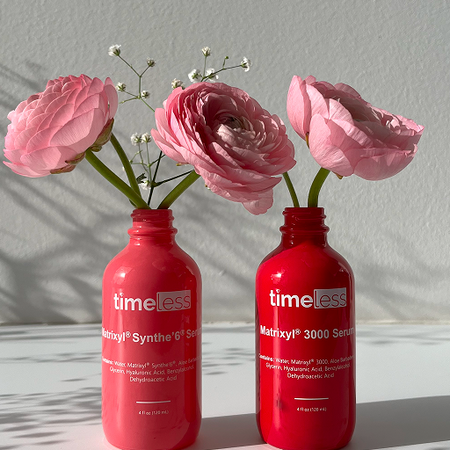
- Matrixyl 3000: A combination containing Palmitoyl Tripeptide-1 and Palmitoyl Tetrapeptide-7. Learn more about Matrixyl 3000.
- Matrixyl Synthe'6: Featuring Palmitoyl Tripeptide-38. The Matrixyl Synthe'6 Serum is one option in this category.
Peptide serums are often water-based and can be used after cleansing and before heavier creams.
Lipid-Soluble Antioxidants: CoQ10
Coenzyme Q10, or ubiquinone, is a lipid-soluble antioxidant naturally found in the skin. It provides antioxidant support as the skin's natural CoQ10 levels decline with age. It helps improve the appearance of fine lines and supports firmer-looking skin.
CoQ10 is generally used once daily. The Antioxidant category includes the Coenzyme Q10 Serum.
Note: If you have vitiligo, check with your dermatologist before using a CoQ10 product.
Managing Skin Responses and Setting Realistic Expectations
Achieving visible improvements in skin tone, texture, and radiance is a gradual process. Consistent application helps support realistic expectations for cosmetic results.
Individual skin biology varies widely. What feels comfortable for one person may cause mild redness or dryness for another. Factors such as climate, water hardness, genetics, and baseline barrier strength all influence how skin responds to new products.
- Introduce one new active formula at a time, allowing time to observe how your skin adjusts.
- If you have known allergies, sensitive skin, or a diagnosed dermatological condition, check with your dermatologist before introducing new active ingredients.
- If flaking or tightness occurs, reduce the frequency of active treatments and focus on basic hydration and barrier support.
Consistency in your daily skincare order, paired with broad-spectrum sun protection, can provide a foundation for long-term skin appearance.
Frequently Asked Questions
How long should I wait between applying skincare steps?
Most products do not require extended wait times. Water-based serums, toners, and lightweight lotions can be applied sequentially as soon as each layer feels absorbed and no longer tacky on the skin surface. The main exception is broad-spectrum sunscreen: allow your moisturizer to dry down before applying sunscreen to ensure an even protective film, and allow sunscreen to set before applying makeup.
Can I use multiple serums in the same routine?
Multiple serums can often be layered by adhering to the thin-to-thick principle. Apply water-thin formulations first, followed by medium-weight gels, and finish with emulsion-style or milky serums. If you are using strong active ingredients, such as direct acids or concentrated Vitamin C, you may choose to use one in the morning and reserve the other for the evening to maintain skin comfort.
Should I apply hyaluronic acid on wet or dry skin?
Hyaluronic acid is a humectant, not a moisturizer. It helps support hydration in the upper layers of the epidermis and may be applied to slightly damp skin. Follow promptly with a lotion or face cream to help reduce moisture loss.
Is an eye cream strictly necessary in a skincare routine?
An eye cream is an optional step. Many gentle face serums and lightweight moisturizers can be used near the eye area if they are free of strong fragrances and direct irritants. However, targeted eye creams are specially formulated for delicate orbital skin and may include specific cosmetic complexes to address the appearance of dark circles or under-eye puffiness.