Introduction
Nothing disrupts a morning routine quite like foundation that pills, settles into fine lines, or separates by midday. When makeup looks uneven or begins to flake, the culprit is rarely the foundation itself. More often, the issue traces back to the steps taken before reaching for a makeup brush.
The order of skincare before makeup can affect how well your cosmetic products adhere, blend, and wear throughout the day. Layering skincare products haphazardly can create a slick surface that makes pigment harder to apply or leaves dry patches that grab onto powder. By understanding how to sequence cleansers, active serums, lightweight hydration, moisturizers, and sun protection, you can help create a workable canvas for cosmetics.
Key Takeaway: Proper skin preparation focuses on thin, intentional layers. Allowing each product time to absorb can help reduce cosmetic formulas sliding, clinging to dry areas, or balling up on the skin.
Why the Order of Skincare Before Makeup Matters
Skincare products have varying textures and functional purposes. Applying them in the wrong sequence can interfere with makeup application.
Applying a thick cream right before foundation without adequate dry-down time can cause makeup pigments to slide around or break apart within hours.
Rule of Thumb: Apply products from thinnest to thickest consistency.
Layering your skincare in the proper order provides several distinct advantages for cosmetic wear. For more guidance, read about layering multiple serums:
- Minimizes Product Pilling: Pilling occurs when skincare ingredients and makeup fail to bind, rolling into tiny balls on the face. Proper sequencing and absorption can help reduce this friction.
- Reduces Dry Patch Clumping: Makeup clings to uneven texture. Supplying targeted hydration first can soften rough areas.
- Balances Surface Shine: Dehydrated skin can sometimes produce more surface oil, causing foundation to break down. Balanced hydration can help makeup wear more evenly.
- Improves Blending: Lightweight formulas applied correctly create a smooth glide, allowing creams and liquids to blend without dragging.


Step-by-Step Guide: The Order of Skincare Before Makeup
Preparing your skin does not require an overwhelming number of steps. A streamlined, intentional routine allows your skin to absorb what it needs while leaving a fresh, workable surface.
Step 1: Gentle Cleansing
Always start with a fresh surface. Overnight, the skin accumulates dead surface cells, excess sebum, and residue from evening products.
Use a gentle, non-stripping cleanser and lukewarm water. Avoid harsh cleansers that leave the skin feeling tight or squeaky. When the skin is stripped of its natural moisture during cleansing, foundation is more likely to cling to dry spots later in the day. Pat your face gently with a clean towel, leaving the skin slightly damp if you plan to use a humectant serum next.
Step 2: Balancing Mist or Hydrating Toner (Optional)
If you use a toner or facial mist, apply it immediately after cleansing. A liquid toner helps refresh the surface and provides a light base for subsequent steps.
Choose alcohol-free formulas that focus on simple hydration. If you choose to skip this step, you can move directly from cleansing to your targeted treatment serum.
Step 3: Targeted Active and Hydrating Serums
Serums deliver targeted ingredients in lightweight, fast-absorbing vehicles. Because they are typically water-based or low-viscosity liquids, they belong directly after cleansing or toning.
Two of the most practical daytime serum choices under makeup include:
Vitamin C
A morning staple, vitamin C helps brighten the look of dullness and uneven tone. It also helps defend against oxidative stress caused by environmental factors such as UV exposure and pollution. Morning use is the most common recommendation, not the only option, and morning use should always be paired with broad-spectrum sunscreen.
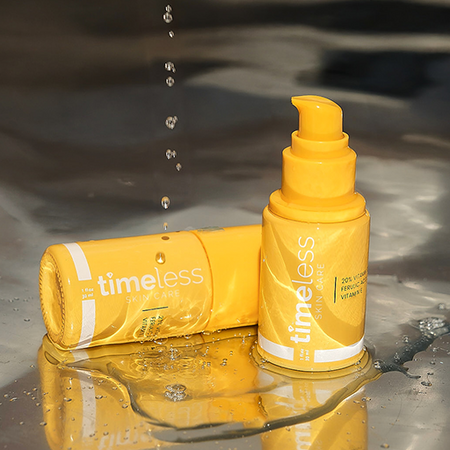
Timeless Skin Care's 20% Vitamin C + E Ferulic Acid Serum is a vitamin C serum.
Hyaluronic Acid
Hyaluronic acid is a humectant, not a moisturizer. It helps attract, bind, and retain water in the outer layers of the skin. It also helps support hydration in the upper layers of the epidermis and helps improve the appearance of dehydration lines. Apply it before moisturizer as part of this routine.
Step 4: Eye Cream (Optional)
The skin surrounding the eyes is thinner than the rest of the face and shows dehydration quickly. If you wear under-eye concealer, applying a dedicated eye cream can help makeup sit smoothly.
Gently tap a pin-sized amount of eye cream around the orbital bone using your ring finger. Allow it a full minute to absorb before applying concealer. Applying too much product or applying it too close to the lash line can cause mascara or eyeliner to smudge.
Step 5: Lightweight Moisturizer
A moisturizer helps reduce transepidermal water loss (TEWL), the water that evaporates from the skin's surface, and helps reduce moisture loss throughout the day. Under makeup, the texture of your moisturizer is critical.
Heavy, highly emollient creams can create an overly slick surface that causes foundation to separate. Instead, opt for a lightweight lotion or gel-cream formula. Smooth an even, thin layer over your face and neck. If your skin leans dry, focus extra product on areas prone to flaking, such as around the nose or between the eyebrows.
Step 6: Broad-Spectrum Daily Sunscreen
Sunscreen is a non-negotiable step in every daytime skincare routine. Regardless of the weather, cloud cover, or whether your foundation contains SPF, a standalone, broad-spectrum sunscreen with SPF 30 or higher must be applied every morning.
Apply your sunscreen generously as the final step of your skincare routine. Wait three to five minutes to allow the sunscreen filters to set and form an even protective film across the skin before introducing makeup. Rushing this step can dilute your sun protection and cause your foundation to streak.
Step 7: Makeup Primer (Optional)
Primer is not strictly necessary for every person or every routine. If your skincare layers provide adequate hydration and a smooth finish, your foundation may apply seamlessly over your set sunscreen.
However, primer serves as a functional bridge between skincare and color cosmetics. If you have areas of excess oil, a targeted mattifying primer on the T-zone can extend makeup longevity. If your skin is prone to dullness, a gripping or hydrating primer can provide extra hold for liquid products. For additional information, see how to use a face serum as a makeup primer.
Skin Prep Summary Table
| Step | Product Type | Primary Function Before Makeup | Wait Time Before Next Step |
|---|---|---|---|
| 1 | Gentle Cleanser | Clears oil, dead skin, and evening residue | None (keep skin slightly damp) |
| 2 | Hydrating Toner / Mist | Balances and refreshes the surface | 30 seconds |
| 3 | Targeted Serum | Supports the selected serum step | 1 minute |
| 4 | Eye Cream | Helps makeup sit smoothly around the eyes | 1 minute |
| 5 | Lightweight Moisturizer | helps reduce transepidermal water loss (TEWL) | 1 to 2 minutes |
| 6 | Broad-Spectrum SPF | Protects skin from UV exposure | 3 to 5 minutes |
| 7 | Makeup Primer | Optional step to refine texture or extend makeup wear | 1 minute |
Customizing Your Skin Prep by Skin Type
Skin needs fluctuate based on environment, genetics, and climate. Tailoring your product selection can help your makeup sit comfortably throughout the day.
Prepping Dry Skin
Dry skin can have less surface oil and often features rough texture that grabs onto pigment.
- Focus: Layering hydration and emollient comfort.
- Approach: After cleansing with a non-foaming wash, apply a humectant serum to help improve the appearance of dehydration lines. Follow with a nourishing lotion that softens rough spots without leaving a greasy residue. Give the moisturizer ample time to absorb so makeup does not slide off dry patches. Explore DIY Build Your Kit when considering your product selection.
Prepping Oily or Combination Skin
Oily skin can produce excess sebum that may break down foundation bases within hours of application.
- Focus: Lightweight, water-based hydration without heavy oils.
- Approach: Cleanse thoroughly using a gentle gel wash. Skip heavy facial oils or thick creams, which can overwhelm the skin. Instead, choose a fast-absorbing antioxidant serum, a lightweight gel moisturizer, and an oil-free, broad-spectrum SPF that dries down to a natural or matte finish.
Prepping Sensitive Skin
Sensitive skin can react to friction, heavy fragrances, or too many competing steps.
- Focus: Minimalist layering and barrier support.
- Approach: Stick to simple formulas with minimal ingredient lists. Avoid aggressive morning exfoliation right before cosmetic application. If your skin barrier feels compromised, focus on gentle products that help the skin feel more comfortable. Individual reactions vary, so anyone with a known sensitivity or diagnosed skin condition should check with their dermatologist before introducing new active formulas.
If you have vitiligo, check with your dermatologist before using a CoQ10 product.
Common Mistakes When Layering Skincare Under Makeup
Even with quality products, minor technique errors can disrupt cosmetic wear. Avoid these common application mistakes:
1. Applying Makeup Too Quickly
The most frequent cause of foundation pilling is rushing between steps. Skincare products need time to settle into the outer layers of the skin. If you apply liquid foundation over wet sunscreen or thick, unset moisturizer, the formulas mix together on the skin rather than layering cleanly.
2. Overloading on Product
More product does not necessarily mean better results. Using too much serum, moisturizer, or primer can create excess buildup that rolls into clumps as soon as you blend foundation with a brush or sponge. Use pea-sized amounts for targeted treatments and nickel-sized amounts for moisturizers.
3. Mixing Incompatible Formulas
Pay attention to the primary bases of your skincare, primer, and foundation. While modern formulations are versatile, pairing a heavy oil-based face oil directly beneath a water-based foundation often leads to separation. Keeping your daytime skincare lightweight and water- or silicone-friendly creates a more versatile base.
4. Relying on Makeup for Sun Protection
Many foundations and tinted moisturizers advertise SPF ratings. However, the amount of makeup typically applied is far below the quantity required to achieve the labeled sun protection factor. Always apply a dedicated broad-spectrum sunscreen beneath your makeup.
Bottom line: A successful pre-makeup routine is about balance. Cleanse gently, layer light hydration, use antioxidants to help defend against oxidative stress caused by environmental factors such as UV exposure and pollution, and give each layer a moment to settle.
Realistic Expectations for Skincare Results
While proper skin prep can immediately improve the ease of makeup application, long-term cosmetic improvements require patience and consistency.
Cosmetic results from topical skincare are gradual and vary significantly from person to person based on age, genetics, environment, and overall routine. Serums that address the appearance of fine lines, surface texture, or uneven tone may produce gradual cosmetic changes with consistent use. Skincare can enhance your natural canvas over time, making makeup an optional enhancement rather than a necessary cover-up.
Frequently Asked Questions
How long should I wait between applying skincare and makeup?
Allow your moisturizer one to two minutes to absorb, and give your broad-spectrum sunscreen three to five minutes to set completely. When your skin feels soft and hydrated rather than wet or sticky, it is ready for foundation.
Can I skip moisturizer if my sunscreen is hydrating?
Yes, depending on your skin type. Many modern sunscreens contain moisturizing ingredients. If you have oily or combination skin, using a hydrating broad-spectrum sunscreen directly over your serum can streamline your routine and prevent excess shine.
Why is my foundation pilling over my skincare?
Foundation pilling usually happens when products are layered too quickly, when too much product is applied, or when heavy oils clash with water-based cosmetics. Allow each layer to absorb fully and ensure you are using lightweight formulas designed for daytime wear.
Should I apply facial oil before foundation?
Most facial oils are best reserved for your evening routine. When applied in the morning, oils can break down the binders in liquid foundations and concealers, leading to premature fading and sliding. If you use an oil in the morning, limit it to a single drop mixed into moisturizer on very dry areas. For additional questions, visit the Frequently Asked Questions page.