Introduction
Evening can be a time when your skin rests from daily environmental stress. During the day, your focus may be on sun exposure, airborne grime, and dry conditions. At night, your skin benefits from thorough cleansing, concentrated hydration, and focused treatments.
Getting the correct skincare order night after night can make a noticeable difference in how your products perform. Applying formulas in the wrong sequence may make it harder for lighter fluids to reach the surface of your skin or cause formulas to roll up into small pills.
Whether you keep things minimal with three basic steps or prefer a comprehensive multi-step regimen, following the correct application sequence can help organize your routine.
Key Takeaway: A foundational rule for layering skincare at night is to apply products from the thinnest liquid consistency to the thickest cream or oil.
The Core Principle: Layering by Texture and Formula Weight
Understanding why skincare order matters removes some of the guesswork from your evening routine. Products are formulated with varying vehicle weights, from watery fluids to dense emollient creams.
Lighter formulas often contain smaller carrier molecules designed to spread quickly across the skin's surface. In contrast, rich creams and oils contain heavier emollient and occlusive agents. If you apply a rich face cream first, a lightweight water-based serum may have more difficulty passing through that lipid layer.
Here is the general flow of textures to follow each evening:
- Watery liquids, such as micellar water, liquid exfoliants, or balancing mists.
- Thin, water-based serums.
- Moderately viscous serums or light lotions.
- Targeted eye-area formulas.
- Emollient moisturizing creams.
- Facial oils or overnight balms.
Following this progression can help products sit properly on the skin and may reduce friction or pilling.


The Complete Evening Skincare Routine Order
To build an organized evening regimen, divide your routine into three clear phases: cleansing, treating, and moisturizing.
| Routine Step | Product Type | Primary Purpose |
|---|---|---|
| Step 1 | Oil Cleanser or Cleansing Balm | Helps break down makeup, sunscreen, and surface oils |
| Step 2 | Gentle Water-Based Cleanser | Helps cleanse remaining residue and impurities |
| Step 3 | Exfoliating Solution or Toner | Refreshes the skin surface and preps for serums |
| Step 4 | Targeted Treatment Serums | Delivers targeted cosmetic ingredients |
| Step 5 | Hydrating Serums | Helps support hydration in the upper layers of the epidermis |
| Step 6 | Eye Cream | Eye-contour care |
| Step 7 | Nighttime Moisturizer | Helps reduce moisture loss |
| Step 8 | Face Oil, Optional | Provides a conditioning outer lipid layer |
Step 1: The First Cleansing Step
A proper nighttime cleanse starts by breaking down oil-soluble debris. Throughout the day, long-wear makeup, silicones, sebum, and water-resistant mineral or chemical sunscreens can accumulate on your face.
Using a cleansing oil, balm, or micellar fluid helps dissolve these surface layers without requiring aggressive scrubbing. Apply the oil cleanser to dry hands and gently work it across dry skin before adding warm water to emulsify and rinse.
Step 2: The Second Cleansing Step
Following your oil cleanser, a gentle water-based wash can remove sweat, residual particles, and any leftover cleansing base. Choose a gentle gel, foaming wash, or cream cleanser that leaves your skin feeling soft rather than tight or stripped. Rinse thoroughly with lukewarm water and pat dry gently with a clean cotton towel.
Step 3: Toner or Chemical Exfoliant
If you choose to use an exfoliating liquid containing alpha hydroxy acids (AHAs) like glycolic or lactic acid, or beta hydroxy acids (BHAs) like salicylic acid, this step follows cleansing. Chemical exfoliants help sweep away dull surface buildup to smooth the feel of rough texture.
Because leave-on acids can cause dryness if overused, limit exfoliating solutions to two or three evenings per week. On evenings when you do not exfoliate, a simple hydrating mist or balancing toner can help prep the surface for serums.
Step 4: Targeted Active Serums
Apply your most targeted treatment fluids immediately after cleansing or toning. This category includes ingredients like retinol, specialized peptides, or evening antioxidants.
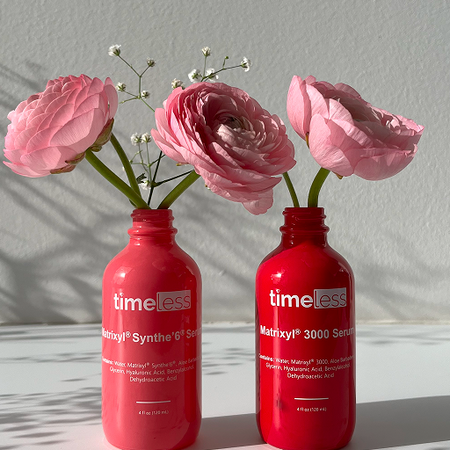
Peptides such as palmitoyl tripeptide-1, palmitoyl tetrapeptide-7, and palmitoyl tripeptide-38 are used in cosmetic routines. They may help support the appearance of firmness. The peptide serum category includes Matrixyl® 3000 Serum.
If you choose to use CoQ10 in the evening, it is generally used once daily. CoQ10 provides antioxidant support as the skin's natural CoQ10 levels decline with age. CoQ10 helps improve the appearance of fine lines. CoQ10 supports firmer-looking skin.
Note: Never apply CoQ10 products under the eyes. If you have vitiligo, check with your dermatologist before using a CoQ10 product.
Step 5: Hydrating Serums
After targeted treatments absorb, layer your humectant serums. Hyaluronic acid is a humectant, not a moisturizer. It helps attract, bind, and retain water in the outer layers of the skin.
Sodium hyaluronate is the sodium salt of hyaluronic acid. It helps support hydration in the upper layers of the epidermis. It helps improve the appearance of dehydration lines. The hydrating serum category includes Hyaluronic Acid 100% Pure.
Another hydrating option is Vitamin B5. Vitamin B5 is listed as Calcium Pantothenate. It supports the skin barrier and helps the skin retain moisture. It helps the skin feel more comfortable.
Step 6: Eye Care
The skin surrounding the orbital bone is generally thinner than the rest of the face. Eye cream is an optional part of this step for the delicate eye contour. The eye cream category includes Dark Circle Peptide Complex Eye Cream.
Use a ring finger to pat eye cream along the orbital bone. Take care to avoid placing product too close to the lash line to minimize the risk of eye irritation.
Step 7: Nighttime Moisturizer
A well-formulated night cream provides emollient care. While humectants hold water, a moisturizer helps reduce transepidermal water loss (TEWL), the water that evaporates from the skin's surface.
Select a texture suited to your skin type:
- Oily or blemish-prone skin: Lightweight gel creams that provide hydration without excess weight.
- Normal or combination skin: Balanced lotion textures rich in ceramides or fatty acids.
- Dry skin: Denser creams containing shea butter, squalane, or plant oils.
Smooth a nickel-sized amount over your face, neck, and chest using gentle upward strokes.
Step 8: Optional Face Oil
If your skin feels particularly dry or exposed to low indoor humidity, an optional facial oil can serve as the final step. Oils generally do not hydrate on their own because they contain no water, but they create a smooth surface layer that helps reduce moisture loss throughout the night. Lightly press two or three drops over your moisturizer.
How to Layer Multiple Serums Without Pilling
Many people like using more than one serum during their evening routine. When combining multiple fluids, follow these practical rules. For additional guidance, see How to Layer Multiple Serums.
Follow Viscosity Closely
If you have two water-based serums, apply the more watery one first. Let it absorb for thirty to sixty seconds before patting the slightly thicker serum over it.
Alternate Potent Ingredients
Avoid layering multiple strong actives on top of one another in a single session. For example, using a direct chemical exfoliant on the same night as a high-strength retinol can lead to visible flaking or unwanted sensitivity. Instead, rotate them by dedicating alternating nights to specific actives.
Allow Brief Absorption Times
You do not need to wait ten minutes between steps, but giving each layer thirty to sixty seconds to settle can help reduce formulas rolling up on the skin.
Tailoring Your Evening Order to Your Skin Type
Adjusting your steps based on how your skin behaves can help support balance and comfort.
| Skin Type | Evening Routine Recommendation |
|---|---|
| Oily / Blemish-Prone | Double cleanse, light BHA liquid, water serum, gel cream |
| Dry / Dehydrated | Creamy double cleanse, hydrating serum, rich cream, face oil |
| Sensitive | Single gentle cleanse, hydrating serum, simple barrier cream |
| Mature | Double cleanse, peptide serum, eye cream, nourishing cream |
Oily and Blemish-Prone Skin
Those with oily skin often make the mistake of skipping moisturizer at night. Dehydrated skin can look dull and feel uncomfortable. Stick to lightweight, non-comedogenic formulas and opt for water-based humectants to keep surface hydration balanced without heaviness.
Dry and Dehydrated Skin
Dry complexions benefit from multiple thin layers of hydration topped with a lipid-rich moisturizer. Applying your humectant serum to slightly damp skin helps attract, bind, and retain water in the outer layers of the skin before a thicker cream helps reduce moisture loss.
Sensitive Complexions
When dealing with sensitivity, simplicity is key. Keep your routine to a basic gentle cleanser, a simple hydrating serum, and a fragrance-free barrier moisturizer. If you suspect an ingredient causes sensitivity, remember that individual reactions vary and anyone with a known sensitivity or diagnosed skin condition should check with their dermatologist.
Realistic Expectations for Evening Skincare
Establishing a thoughtful nighttime sequence can support consistent care, but visible changes may take time. Cosmetic changes can occur gradually with steady use.
Hydration may show visible improvement with consistent use of humectants and moisturizers. Hyaluronic acid helps improve the appearance of dehydration lines. Changes in skin smoothness, tone uniformity, and the appearance of fine lines may develop with consistent evening use.
Consistency may be more useful than using excessive amounts of product or switching formulas frequently.
Frequently Asked Questions
Can I use Vitamin C in my nighttime skincare order?
Yes, you can use Vitamin C in the evening. While morning use is the most common recommendation, it should always be paired with a broad-spectrum sunscreen. Vitamin C can also be used at night. In the evening, it helps brighten the look of dullness and uneven tone. Apply it directly after cleansing and toning before applying heavier creams.
How long should I wait between applying skincare steps at night?
You only need to wait thirty to sixty seconds between steps, or just long enough for the liquid to absorb so the skin feels receptive rather than wet. For prescription treatments or strong retinoids, waiting until the skin is completely dry after cleansing can help minimize the potential for irritation.
Should I apply facial oil before or after my night moisturizer?
Facial oils should generally be applied after your water-based moisturizer or mixed directly into it. Because oils are occlusive and emollient, applying them before a water-based cream can prevent the water and humectants in the cream from reaching the outer layers of your skin.
Do I need a toner in my nighttime skincare routine?
Toners are optional steps rather than absolute necessities. If your cleanser rinses away cleanly without leaving residue or disrupting comfort, you can move straight from cleansing to your treatment serums. However, if you enjoy using an exfoliating acid or a gentle hydrating mist to prep the surface, using a toner after cleansing works well.